
3 years, 4 months old
Embracing Their Adventure
Play ideas, a book, a song and a little encouragement for your 40 month old, from Maddie.

By Maddie, early childhood educator and Mum
6 min read · Updated
In this guide
Hello!!!
As we step into month 40 together (or as you might now say, almost three and a half!), your little one is right in the heart of imagination and big feelings.
You might find them becoming a doctor one minute, getting chased by some very real crocodiles, or retelling a story with great drama and detail. Alongside this beautiful creativity can come some very real, very big emotions, excitement, frustration, pride, and everything in between.
I remember really feeling a shift in my eldest around this age.
Up until then, emotions felt fairly simple; happy, sad, tired, upset. But almost overnight, it was like a whole new layer opened up. Suddenly there was frustration, jealousy, excitement, worry, pride, disappointment, even a kind of confusion they couldn’t quite put into words.
It honestly felt like watching the sequel to "Inside Out" unfold in real time.

And these weren’t quiet, subtle feelings; they came fast, big, and often all at once. It could feel like constant switching, and at times, overwhelming for both of us. (This may look different for you and your child, this is just my experience, and it was lighter with my second.)
But that shift also brought a bit of an awakening for me. I tried hard to look beyond the “behaviour” and more at the emotion… it was a child trying to make sense of a whole new world of feelings, without yet having the language or tools to manage them.
And when I saw it that way, it softened everything. It didn’t make the moments easy, and I definitely lost my patience some times; but it did help them make sense, and it would either sometimes help me take an extra breath before reacting, or crumple down with them in a big cuddle to light the load for them.
These days can feel full and intense… and right in the middle of it all, you are there. And that is more than enough.
Activity 1: Pretend Play “Real Life”
How: Lean into their imagination by acting out everyday moments together, playing doctors, hosting a birthday party, being Santa delivering presents, or running a café. Use whatever you have at home, scarves, containers, old cards, soft toys. Let your child lead the story (even if it makes no sense!).
Why: This kind of play helps children process their world and make sense of big feelings. When they act things out, they’re practicing social skills, building confidence, and exploring emotions in a safe and playful way.
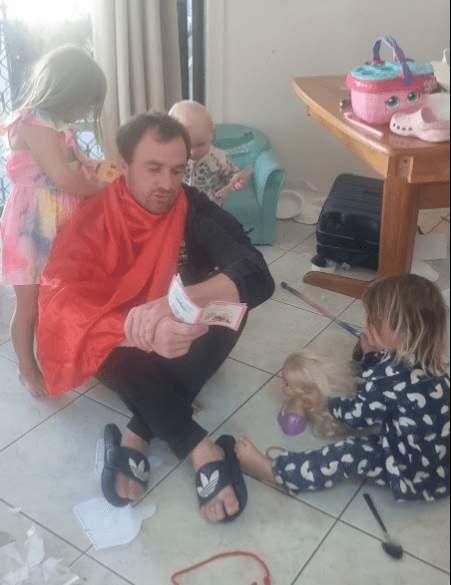
Sometimes the simplest everyday items are more than enough. A pillow becomes a present to unwrap, a spoon is the medicine at the doctors, and suddenly the ordinary feels full of possibility.
My girls played for months with a clothes drying rack set up on its side on the verandah. And at one point, they even fought over an imaginary doll, my eldest holding out her hands, my middle reaching up in tears for something that wasn’t even there. (I definitely had to hold back a laugh!)
It’s a beautiful reminder that imagination doesn’t need much… just space to grow 💛
Nature Painting & Printing
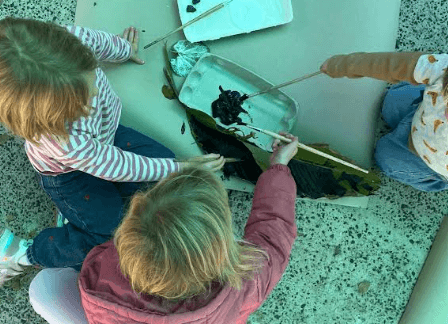
How: Grab some paint (poster paint or water colours) and head outside to find some interesting natural treasures to create with. Try painting on big rocks, pieces of bark, leaves or sticks and see how the different surfaces change the way the paint looks. You can also spread out some paper and use your nature finds to make prints—pressing, stamping, dragging and experimenting with the different marks and patterns they create.
Why: Nature painting and printing encourages creativity, curiosity and sensory exploration as children discover how different natural materials create different colours, textures and patterns. Experimenting with pressing, stamping and painting supports hand strength, coordination and control, while exploring what happens when they change the way they use each object builds early problem-solving skills and an understanding of cause and effect. 🌿🎨
Activity 3: Roll, Catch & Chase
How: Head outside with a ball and keep it simple, roll it, throw it, or see if they can catch it after one bounce. Add in a bit of running, chasing, or a “goal” to aim for. There are no rules, just keep it fun and follow their lead. Celebrate the attempts as much as the successes, and don’t be afraid to get a little silly with it.
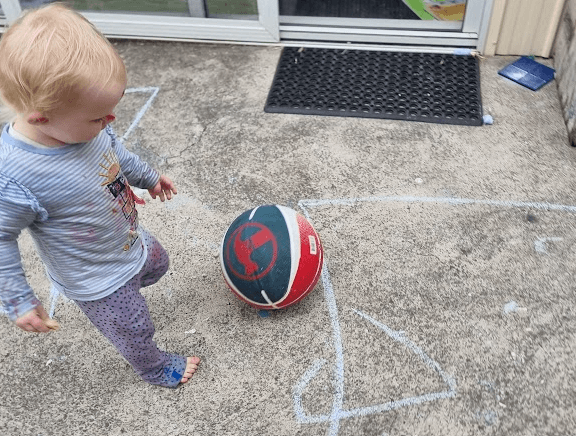
why: Ball play builds coordination, timing, and body awareness. It also supports connection, those back-and-forth moments of play are just as important as the skill itself.
Song of the Month: The Wheels on the Bus
A classic that never gets old and for good reason!
With its easy and repetitive lyrics and fun easy to follow along actions it a good one for so many ages. As your little one grows you may want to have fun, making your own silly verses...
“The dog on the bus goes woof woof woof!”
or adding your own child in "The Remis on the bus like to...(and then encourage them to choose something).
It’s simple, interactive, and one of those songs that can fill a whole moment with connection, laughter, and a little bit of magic ✨
A gentle, grounding favourite; perfect for slowing things down after a big, busy day.
Book of the Month: The tiger who came for tea- Judith Kerr
You might find your little one starting to sit through longer stories, this is a beautiful, imaginative story, which was a fan favorite in our house for a long time.
Remember even if at times they may sit for a whole story, sometimes they may choose to read it quicker or only look at the pictures, its all reading and learning. Just follow their lead, its the best way to further that love for reading.
Did You Know?
Imaginative play is how children begin to understand feelings.
When they pretend to be the doctor, the parent, or even Santa, they’re exploring different roles, perspectives, and emotions. It’s their way of making sense of the world; and their place in it.

Social & Emotional Skill Building: Supporting Big Feelings
At this age, feelings can be big and come quickly. Instead of trying to fix or stop them, try sitting alongside and naming what you see:
“That felt really upsetting.”
“You were so excited for that.”
When children feel understood, they begin to understand themselves. Over time, this helps them learn to manage those big feelings with more confidence and calm.
My girls all respond differently when they’re upset, and it’s not always easy to know what they need straight away. Sometimes they come running in for a hug, and other times all you want to do is scoop them up, but they push you away, and it only seems to make things worse.
Taking a second longer to respond, staying close without rushing in, can help you figure out what they need in that moment 🤍
✨ Remember this stage can feel big; big play, big emotions, big energy.
But within it all, your presence is what grounds them. Your calm, your connection, your willingness to step into their world (even when it’s a little chaotic) is what helps them feel safe to explore it.
You’re not just getting through the days, you’re helping them make sense of their world.
And that is more than enough 💛